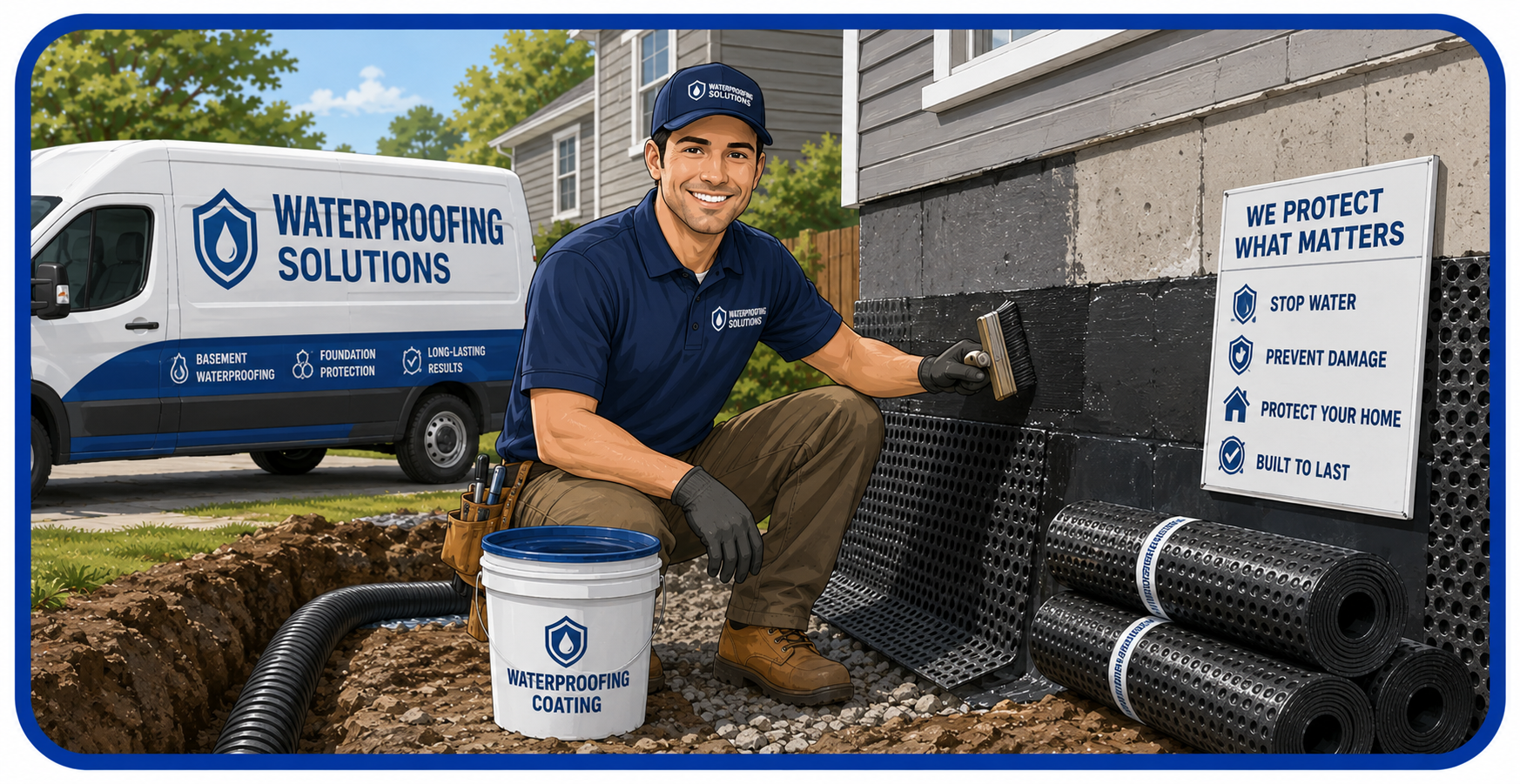
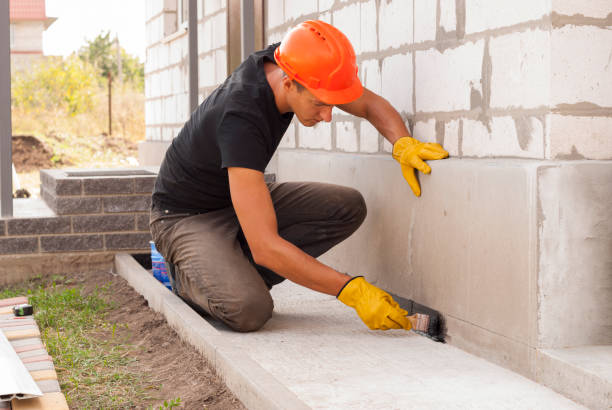
Ground moisture is silently working against your crawl space every day. When water vapor rises from bare soil, it saturates wood framing, degrades insulation, and turns your crawl space into a breeding environment for mold and structural rot. Professional vapor barrier installation by Koppers Waterproofing stops moisture at its source before it reaches the living areas of your home.
Why Koppers Waterproofing
We do not cut corners on materials, coverage, or seam integrity. Every crawl space we service receives a system-level installation built to protect your home for decades.
We install 12-mil to 20-mil reinforced polyethylene sheeting, not the thin 6-mil consumer-grade film sold at hardware stores. Our poly is puncture-resistant, cross-laminated, and rated for long-term ground contact without degrading under soil chemistry or humidity cycles.
Every overlap point is sealed with professional butyl tape, not simply stapled or left loose. Unsealed seams are the most common failure point in budget vapor barrier jobs because moisture finds gaps and migrates beneath the poly. Our sealed-seam method eliminates that vulnerability entirely.
True vapor control requires running the barrier from the ground up the foundation walls to the sill plate. Stopping the barrier at the dirt line leaves exposed wall surfaces that continue to release moisture. Our full-perimeter wall coverage is included as a standard component, not an add-on.
Our installations are backed by written warranties covering both materials and labor. If moisture infiltration related to barrier failure occurs within the warranty period, we return to inspect and remediate at no cost. We stand behind every job we complete in Eldorado, WI because our reputation depends on it.
Expert Installations in Eldorado, WI
A vapor barrier is a low-permeance sheet material installed across the soil floor of a crawl space to block the upward migration of ground moisture into the structural components of your home. The soil beneath your crawl space is perpetually damp, and water vapor moves continuously from areas of high concentration in the ground to areas of lower concentration in the air above it through a process called vapor diffusion. Without an effective barrier, that moisture saturates wood floor joists, sub-flooring, and insulation from below.
Consumer-grade 6-mil polyethylene sheeting, the thin plastic sold at home improvement stores, is technically a vapor retarder but it is woefully inadequate for a working crawl space environment. Six-mil poly degrades rapidly when exposed to soil chemistry, UV during installation, normal foot traffic during maintenance, and the minor abrasion caused by stones and debris beneath it. It tears easily at penetrations around pipes, columns, and utility runs, leaving gaps that allow full moisture passage. The seams on 6-mil poly are almost impossible to tape effectively because the material lacks the dimensional stability needed for a consistent butyl bond.
Professional-grade vapor barriers start at 12-mil and go up to 20-mil reinforced cross-laminated polyethylene. The material difference is significant: 20-mil reinforced poly can withstand 200 pounds per square foot of puncture resistance, has a perm rating well below 0.1 (the threshold for a true vapor barrier versus a vapor retarder), and maintains dimensional integrity for 20 or more years when installed correctly. The perm rating measures how many grains of water vapor pass through a material per hour per square foot per unit of vapor pressure difference. The lower the perm rating, the more effective the barrier.
Proper installation begins with site preparation: removing old degraded poly, clearing standing debris, and ensuring the ground surface is reasonably smooth so the new barrier lays flat without bridging over depressions. The barrier then covers 100% of the ground surface with no exposed soil patches. At every seam, panels overlap by a minimum of 12 inches, and every overlap is sealed with 4-inch butyl tape pressed firmly from the center outward to eliminate air pockets beneath the bond. Stapling seams instead of taping them is a shortcut that leaves moisture pathways.
Wall coverage completes the system. The barrier extends from the ground up the foundation walls to the sill plate at minimum, mechanically fastened to the wall with termination bar or concrete anchors and sealed along the top edge. This perimeter seal prevents moisture from wicking around the edge of the floor coverage and rising behind it. Pipe penetrations, columns, and utility runs receive individual wrapping and tape seals rather than leaving the poly to gap around them.
Moisture control in a crawl space also connects directly to your home's HVAC system performance. When relative humidity in the crawl space is uncontrolled, your conditioned air above must work harder to compensate for the thermal load introduced by evaporation from the soil. Homeowners who add a properly installed vapor barrier alongside a crawl space dehumidifier typically report measurable reductions in summer cooling loads. The insulation in the crawl space also performs closer to its rated R-value when it is not saturated with moisture. Mold growth, which requires surface moisture, a food source such as wood, and a temperature above approximately 40 degrees Fahrenheit, becomes significantly less likely when relative humidity in the crawl space is kept below 60%. A professional-grade sealed barrier installation from Koppers Waterproofing addresses the root cause of crawl space moisture problems, not just the symptoms.
What We Install
Every component of a professional vapor control system, handled by trained installers with the right materials.
Our primary material is heavy-duty 20-mil reinforced polyethylene with a perm rating below 0.1. This commercial-grade barrier delivers the puncture resistance, longevity, and moisture-blocking performance that residential crawl spaces require. Available in white or black depending on project specifications.
Full 100% soil coverage across the entire crawl space floor, including tight installation around columns, footings, piers, and utility penetrations. No exposed patches of bare soil remain after our installation. We work systematically from one end of the crawl space to the other, ensuring no area is missed.
The barrier extends up foundation walls from the ground to the sill plate, secured with termination bar and sealed at the top. This full perimeter wall coverage prevents moisture from traveling around the edge of the floor barrier and eliminates the gap that most budget installations leave exposed.
All panel overlaps are a minimum of 12 inches and sealed with 4-inch professional butyl tape. Butyl-based adhesive maintains its bond under the temperature cycling and humidity variation that characterizes a crawl space environment, unlike acrylic tapes that peel away over time. Every seam is pressed and checked before the next panel is laid.
For crawl spaces receiving a dehumidifier as part of a complete moisture management system, we coordinate the barrier layout to accommodate drain line routing, condensate paths, and electrical access without compromising the sealed system. Properly integrated, a dehumidifier and sealed barrier work as a unified system to maintain target relative humidity levels year-round.
Degraded, torn, or improperly installed vapor barriers must be fully removed before a new system is installed. We remove all old poly, clean debris from the ground surface, assess the condition of exposed wood framing and insulation, and prepare the surface for proper new installation. Layering new poly over failed old material traps existing moisture and creates conditions for continued decay.
Our Process
A structured four-stage process that covers every component of professional vapor barrier installation from first call to final inspection.
We begin with a phone consultation to understand your crawl space dimensions, existing moisture issues, and any prior work. Our technician then performs an on-site assessment to measure the coverage area, evaluate soil conditions, document the state of any existing barriers, and check for active water intrusion, wood rot, or mold that should be addressed before or alongside the installation.
Any existing degraded vapor barrier material is removed completely and bagged for disposal. The ground surface is cleared of debris, sharp stones, and organic matter that could abrade the new poly from below. Low spots or voids that might cause bridging are identified. Wood framing is inspected and any moisture readings above threshold are documented before coverage begins.
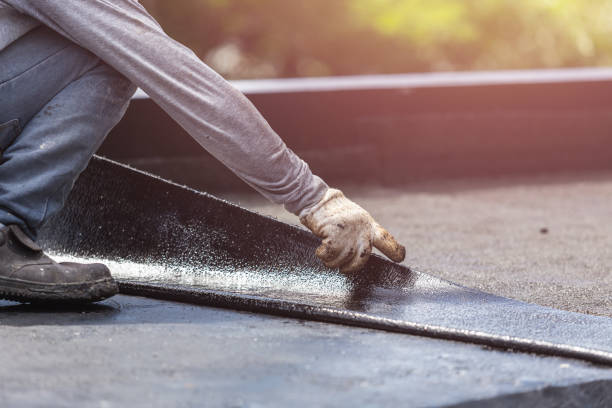
Panels of 20-mil reinforced poly are laid systematically across the floor with full ground coverage. Each seam overlaps a minimum of 12 inches and is sealed with 4-inch butyl tape applied with consistent pressure. Individual wraps are applied to columns, footings, and pipe penetrations. The barrier then runs up foundation walls to the sill plate and is mechanically fastened and sealed along the top edge.
A final walkthrough verifies that every seam, penetration, wall transition, and corner is properly sealed and that no gaps or unsealed overlaps remain. We test seams for adhesion, confirm wall termination bar is fully anchored, and photograph the completed installation for your records. A written summary of materials used, coverage area, and warranty terms is provided before we leave.
What Homeowners Say
We had lived with a musty odor in our first floor for years and assumed it was just the house. After Koppers Waterproofing installed the vapor barrier in our crawl space, the smell was completely gone within two weeks. We had no idea how much moisture was coming up from the soil. The team was thorough and explained every step of what they were doing.
My HVAC contractor told me my system was running fine but my cooling bills were still high. Turns out my crawl space had a cheap barrier that had torn in multiple places. Koppers Waterproofing replaced the entire thing with 20-mil reinforced poly, sealed all the seams, and ran it up the walls properly. My air conditioning runs noticeably less now and the humidity in the house is much more stable. Worth every dollar.
I was impressed by the quality of the materials right from the start. The poly they use is nothing like what I had seen before and the way they tape and seal every single seam shows they actually know what they are doing. The technician who did our crawl space took photos during and after so I could see exactly what was installed. I feel confident this is going to hold up for a long time.
Common Questions
Straight answers to the questions homeowners in Eldorado, WI ask most before scheduling their installation.
Professional vapor barrier installation in Eldorado protects your floor framing, insulation, and air quality for decades. Call Koppers Waterproofing today for a site assessment and written estimate.
📞 +1-866-476-1348